Skip to content
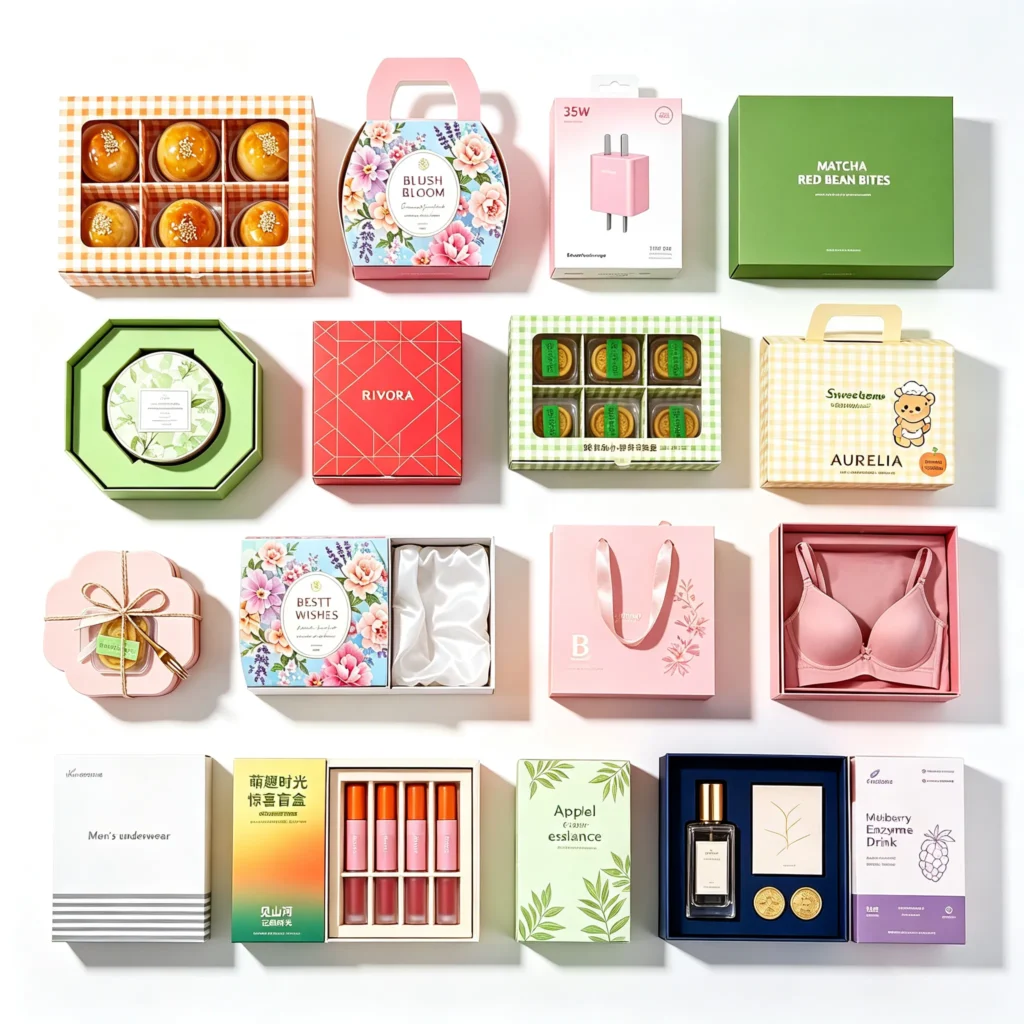
Still struggling to figure out which style of packaging box will perfectly capture your product’s vibe?
As a professional packaging box manufacturer, we’ll give it to you straight: choosing the right box style is what makes your product win at first sight.
A well-suited box style doesn’t just catch consumers’ eyes instantly and reinforce your key selling points—it also silently conveys your brand quality, effectively boosting your product’s reputation and value.
We’ve organized 12 of the most popular and high-impact packaging box styles on the market, ranging from basic to creative designs—covering cost considerations, quality upgrades, and customer preferences.
12 Popular Box Styles
Tuck End Box
Best Used For:
Best suited for lightweight and compact products, such as skincare, toothpaste, pharmaceuticals, stationery, and small snacks.
Why Choose a Tuck End Box?
Featuring a straightforward tuck-flap closure at both ends, this design offers a simple structure and high manufacturing efficiency. Its low material and processing costs make it the go-to choice for high-volume orders and budget-sensitive products.
Key Considerations:
Because the bottom relies solely on tuck flaps, its weight capacity is limited—not recommended for heavier items. As a classic and common style, if your brand seeks a premium unboxing experience or distinct shelf presence, consider magnetic boxes, drawer boxes, or lid-and-base boxes instead.
Quick Takeaway:
👉 Lightweight, small products + high volume + cost control → Go with Tuck End Boxes.
👉 Heavier products or seeking a high-end/unique appeal → Consider other styles.
Auto-Bottom / Crash Lock Box
Best Used For:
Ideal for electronics, agricultural produce, food items, and daily goods—any product requiring enhanced bottom support and load capacity.
Why Choose an Auto-Bottom Box?
It features a standard tuck-top closure with an interlocking bottom structure. Compared to double tuck boxes, it provides a significantly stronger base and higher weight resistance, making it ideal for heavier goods or products needing extra durability during transit.
Key Considerations:
The auto-bottom structure requires slightly more complex manufacturing and assembly, which can marginally increase costs. If your product is light and requires minimal support, a standard Tuck End Box remains the more cost-effective choice.
Quick Takeaway:
👉 Heavier products requiring better structural strength → Go with Auto-Bottom Boxes.
👉 Lightweight products prioritizing minimal packaging cost → Tuck End Boxes are a better fit.

Mailer Box
Best Used For:
Clothing, brand merchandise, jewelry, small electronics, and other medium-sized products requiring safe transit. It is one of the most popular box styles for e-commerce and express shipping.
Why Choose a Mailer Box?
It folds into shape directly from cardboard and typically requires no gluing, making it easy to assemble while saving on processing costs. Its structural design provides great crush resistance, making it ideal for direct shipping and delivery.
Key Considerations:
While mailer boxes support custom printing, other box styles might be a better fit if your packaging demands highly intricate graphics, fine detail, or a luxury gift-box feel. For heavier or larger products, factor in board thickness, box dimensions, and shipping costs.
Quick Takeaway:
👉 Easy assembly, e-commerce shipping, and transit safety → Go with Mailer Boxes.
👉 Intricate printing, premium gift feel, or fine detail → Consider other styles.

Lid and Base Box
Best Used For:
Smartphones, headphones, beauty devices, jewelry, tea, gifts, and other products where packaging texture and unboxing experience matter. Commonly used for premium gift boxes and high-end merchandise.
Why Choose a Lid and Base Box?
Composed of a separate lid and base that fit together, this structure is sturdy, sleek, and elegant. The two-piece unboxing process adds a sense of ritual, making it effortless to showcase product quality and brand value.
Key Considerations:
Lid and base boxes generally require more board material and carry higher manufacturing costs. If your product is budget-friendly or your main priority is minimizing packaging costs and maximizing shipping efficiency, this style may not be the most economical choice.
Quick Takeaway:
👉 Prioritizing premium texture, brand image, and unboxing experience → Go with Lid and Base Boxes.
👉 Focusing on cost efficiency and shipping practicalities → Consider simpler box structures.

Book-Shaped Box / Magnetic Folding Box
Best Used For:
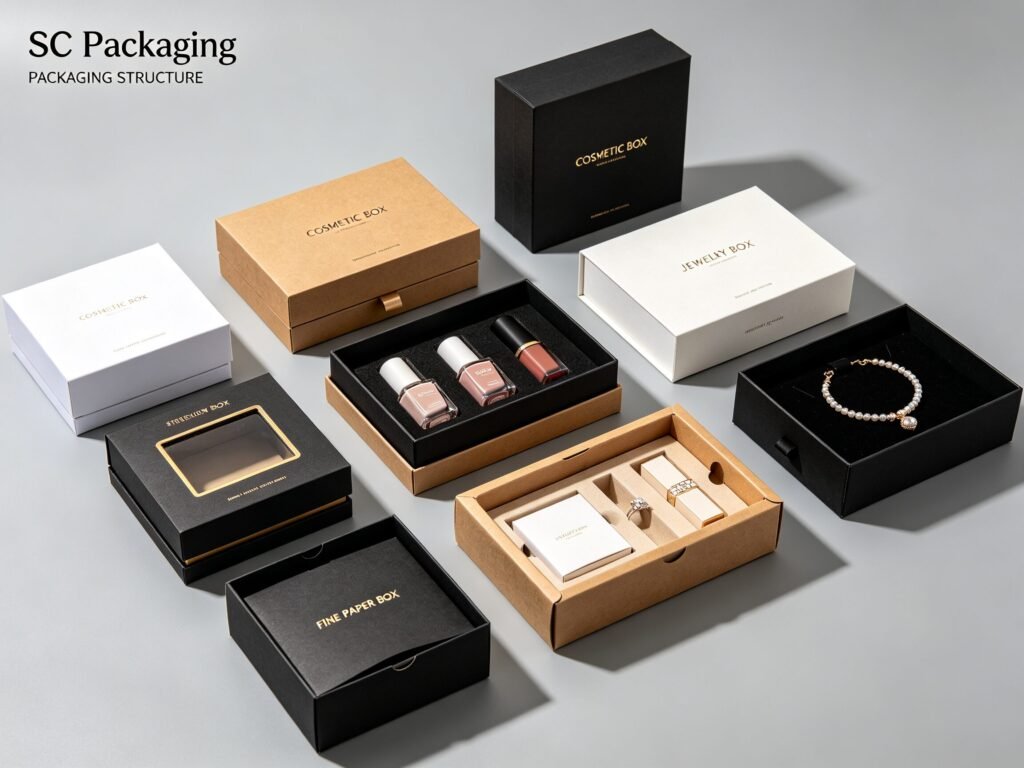
High-end gifts, jewelry, cosmetics, perfumes, collectibles, and other products prioritizing brand image and premium packaging texture. Frequently used for boutique gift boxes and affordable luxury packaging.
Why Choose a Book-Shaped Box?
Designed like a book that opens from the side, it typically consists of an outer shell and an inner tray, often fitted with magnetic closures. The unique side-opening mechanism delivers a strong sense of design. Combined with processes like foil stamping or embossing, it significantly enhances visual texture and brand recognition.
Key Considerations:
Its construction and surface finishing are relatively complex, making overall costs generally higher than standard folding cartons. The side-opening style is less direct for product display compared to lid and base boxes, and larger or bulkier products require early structural evaluation.
Quick Takeaway:
👉 Seeking high-end appeal, design flair, and a memorable unboxing experience → Go with Book-Shaped Boxes.
👉 Larger product dimensions, or prioritizing cost and maximum display space → Consider other styles.

Drawer Box / Slide Box
Best Used For:
Pastries, tea, chocolates, jewelry, gifts, and products requiring secure storage and a smooth unboxing experience. A popular choice for gift sets and boutique merchandise.
Why Choose a Drawer Box?
Composed of an outer sleeve and an inner tray, it opens via a smooth sliding motion. The dual-layer structure provides excellent protection, keeping items securely in place. The sliding mechanism adds an interactive element, making product retrieval feel natural and refined.
Key Considerations:
With a design more intricate than standard folding boxes, it uses more material and requires extra processing, which naturally increases total cost. If your product doesn’t need high structural protection or an interactive opening experience, simpler box structures may be more suitable.
Quick Takeaway:
👉 Need better product protection, organized storage, and interactive unboxing → Go with Drawer Boxes.
👉 Focusing on lower packaging costs and higher production speed → Consider simpler box structures.

Gable Box / Handle Box
Best Used For:
Souvenirs, food items, tea, gift sets, and holiday hampers—products intended to be easily carried. The built-in handle allows customers to carry their purchase away instantly, making it perfect for offline retail, event giveaways, and gifting scenarios.
Why Choose a Gable Box?
Typically featuring an auto-bottom structure, it offers solid bottom support while incorporating a top handle. It’s easy to carry and doubles as a mobile advertisement for your brand. For direct store purchases, it also eliminates the need for an extra shopping bag.
Key Considerations:
Box size, weight capacity, and handle structure must be properly balanced. For heavier or bulkier items, evaluate cardboard strength, bottom locking mechanisms, and handle load limits in advance to prevent tearing or deformation during transport.
Quick Takeaway:
👉 Need customers to carry the package conveniently, or targeted for souvenir and gift scenarios → Go with Gable Boxes.
👉 Heavier or larger products → Verify cardboard thickness, bottom structure, and handle load capacity before finalizing the design.

Hanging Hole Box / Hang Tab Box
Best Used For:
Batteries, stationery, toothbrushes, earphones, and small electronics—small, lightweight items displayed on retail hooks. Frequently seen in supermarkets, convenience stores, and electronics shops.
Why Choose a Hanging Hole Box?
Equipped with a built-in hanging hole at the top, it mounts directly onto retail pegboards or display hooks. This maximizes vertical shelf space and ensures products are easily seen and picked by shoppers. Depending on your budget, it supports various paperboards, printing options, and surface finishes.
Key Considerations:
Designed primarily for compact items, this style is unsuitable if your product is large, heavy, or sold mainly through e-commerce channels. For everyday consumer goods, standard paperboard with full-color printing keeps packaging costs low while satisfying shelf presentation needs.
Quick Takeaway:
👉 Requires hanging presentation on supermarket or retail display hooks → Go with Hanging Hole Boxes.
👉 Larger items or products sold without the need for hook display → Consider other box styles.

Window Box / Window Patching Box
Best Used For:
Spirits, food, toys, gifts, and handcrafted goods—products where revealing the physical appearance drives sales. It is particularly effective for items with distinctive colors, shapes, or crafted details.
Why Choose a Window Box?
Featuring a die-cut cutout with a clear plastic film (PET/PVC), it lets shoppers view the actual product inside without opening the package. This eliminates buyer guesswork and allows you to customize the window’s shape and placement to add visual flair to standard packaging.
Key Considerations:
Window positioning must balance visual appeal with structural integrity. A window that is too large or placed poorly can compromise overall box strength and protective capability. For items requiring light shielding, dustproofing, or high impact resistance, evaluate the feasibility of a window design first.
Quick Takeaway:
👉 Product appearance is a strong selling point and deserves direct visibility → Go with Window Boxes.
👉 Prioritizing maximum structural protection or hiding the interior product → Consider solid, windowless box styles.

Display Box / Counter Display Box
Best Used For:
Cosmetics, mystery blind boxes, toys, stationery, and small gadgets—products that need to stand out on retail shelves or checkout counters. Ideal for beauty items like eyeliners, brow pencils, and mascaras, as well as impulse-buy merchandise.
Why Choose a Display Box?
It serves as both protective packaging and an active point-of-sale (POS) display. Combining custom box structure, vivid printing, and organized product arrangement, it creates a unified display screen that captures high visual attention in physical stores.
For offline retail, packaging acts as the primary brand touchpoint. A well-designed display box highlights key product features, reinforces brand identity, and maximizes shelf presence.
Key Considerations:
The core focus is “merchandising presentation” rather than basic packaging. Design choices must factor in product placement, consumer viewing angles, counter footprint, and brand aesthetics. If your product is sold primarily online, a dedicated display box won’t fully leverage its core benefits.
Quick Takeaway:
👉 Sold mainly on physical retail shelves or checkout counters requiring high visual attention → Go with Display Boxes.
👉 Focused on e-commerce shipping or transportation protection with no retail counter display needs → Consider standard packaging styles.

Custom Shaped Box / Irregular Box
Best Used For:
Cosmetics, food, gift items, toys, cultural goods, and electronics—products seeking to showcase unique brand personality and distinctive character. Perfect for brands wanting to break away from standard packaging both on store shelves and e-commerce visuals.
Why Choose an Irregular Box?
Its defining feature is a strong sense of architectural and visual design. Unrestricted by traditional rectangular box shapes, it can be customized according to product contours, brand symbols, or campaign themes—making the box an integral part of the product’s artistic appeal.
For brands aiming for differentiation, a unique box geometry captures immediate attention on retail shelves, online product pages, and social media feeds.
Key Considerations:
Custom shapes demand higher structural engineering, precise die-cutting, and complex assembly, leading to higher development fees and production costs. You must also assess inner sizing, manual/automated packing workflows, shipping efficiency, and mass production feasibility.
Quick Takeaway:
👉 Seeking highly creative packaging that highlights brand identity and product differentiation → Go with Custom Shaped Boxes.
👉 Prioritizing production efficiency, cost control, or shipping practicality → Standard box styles are a better fit.

Double-Opening Box
Best Used For:
Ideal for gifts, cosmetics, jewelry, specialty foods, and premium products that benefit from a more distinctive opening experience and a wider product presentation.
Why Choose a Double-Opening Box?
The box features two panels that open from the center, creating a symmetrical and eye-catching presentation. This opening style provides a wider view of the contents and can make the unboxing experience feel more refined and engaging. It is especially suitable for brands looking to create a more distinctive presentation than standard folding boxes.
Key Considerations:
The double-opening structure is more complex than a standard tuck-end box, which can increase material use, production steps, and overall packaging costs. The structure should also be designed carefully around the product size and opening mechanism to ensure a smooth user experience.
Quick Takeaway:
👉 Want a wider presentation and a more distinctive unboxing experience → Consider a Double-Opening Box.
👉 Prioritize simple production and lower packaging costs → A standard box style may be a better fit.

From the “practical functions” of meeting product protection and transport requirements, to the “expressive value” of elevating the unboxing experience and shaping brand identity, packaging box design serves as a vital bridge between products and consumers.
As a professional packaging manufacturer, SC Packaging believes that selecting a box structure is not merely about aesthetic appeal. It requires a comprehensive evaluation of product dimensions, weight, usage scenarios, packaging budget, shipping methods, and brand positioning. The right box type isn’t necessarily the most complex or expensive; rather, it strikes the optimal balance between protecting the product, controlling costs, and delivering a powerful brand image.